Login Form
History — Israel (1906-1920)
 Historical events during the downfall of the Ottoman Empire and the Second Aliyah (the immigration of predominantly Russian Jews), the formation of the Kibbutz movement, the expulsion of the Russian Jews by the Ottomans at the start of WWI; the formation and military education of the Jews who eventually would fight for Israel independence, and the development of the unique culture of Israelis who were embattled by Arab violence instigated by their imams.
- Details
- Parent Category: Historic Impact
- Category: History — Israel (1906-1920)
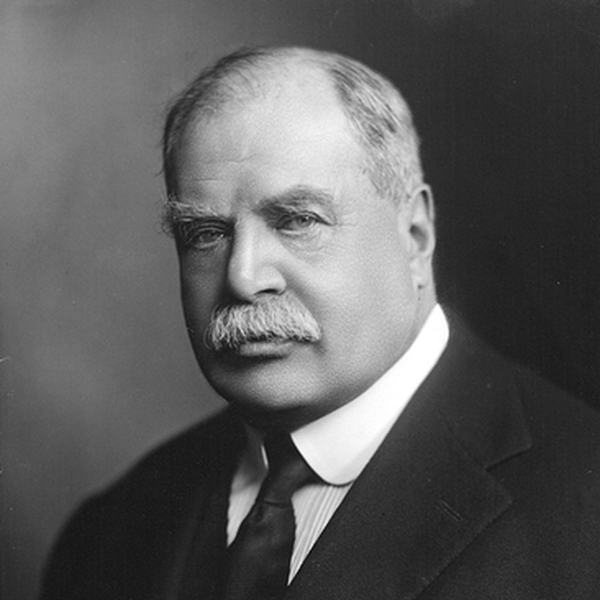
Edward George Villiers Stanley, 17th Earl of Derby, KG, GCB, GCVO, TD, PC, JP (4 April 1865 – 4 February 1948), styled Mr Edward Stanley until 1886, then The Hon Edward Stanley and then Lord Stanley from 1893 to 1908, was a British soldier, Conservative politician, diplomat, and racehorse owner. He was twice Secretary of State for War and also served as British Ambassador to France.
- Details
- Parent Category: Historic Impact
- Category: History — Israel (1906-1920)

Kfar Giladi(Hebrew: כְּפַר גִּלְעָדִי, lit. Giladi Village) is a kibbutz in the Galilee Panhandle of northern Israel.[2] Located south of Metula on the Naftali Mountains above the Hula Valley and along the Lebanese border, it falls under the jurisdiction of Upper Galilee Regional Council. In 2017 it had a population of 670.[1]
- Details
- Parent Category: Historic Impact
- Category: History — Israel (1906-1920)
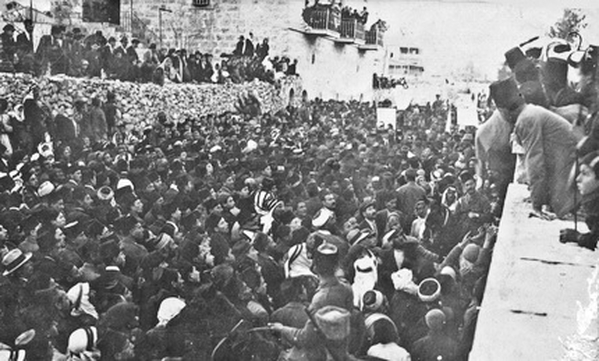
The 1920 Nebi Musa riots or 1920 Jerusalem riots took place in British-controlled part of Occupied Enemy Territory Administration (which would shortly become Mandatory Palestine) between Sunday, 4 and Wednesday, 7 April 1920 in and around the Old City of Jerusalem. Five Jews and four Arabs were killed, and several hundred were injured.[1]The riots coincided with and are named after the Nebi Musa festival, which took place every year on Easter Sunday, and followed rising tensions in Arab-Jewish relations. The events came shortly after the Battle of Tel Hai and the increasing pressure on Arab nationalists in Syria in the course of the Franco-Syrian War.
- Details
- Parent Category: Historic Impact
- Category: History — Israel (1906-1920)
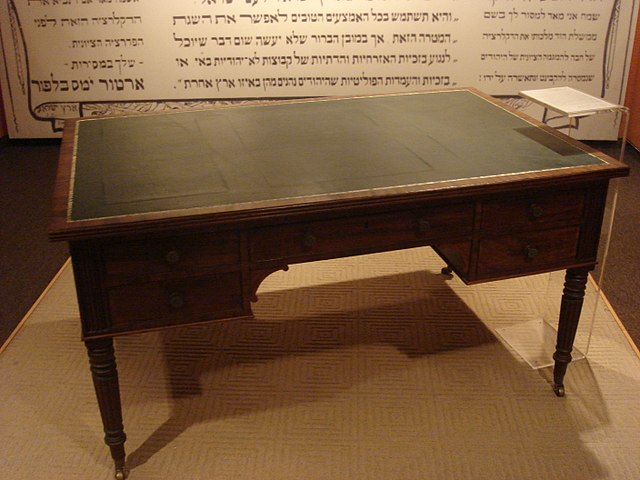
The Balfour Declaration was a public statement issued by the British government in 1917 during World War I announcing support for the establishment of a "national home for the Jewish people" in Palestine, then an Ottoman region with a small minority Jewish population. It read:
His Majesty's government view with favour the establishment in Palestine of a national home for the Jewish people, and will use their best endeavours to facilitate the achievement of this object, it being clearly understood that nothing shall be done which may prejudice the civil and religious rights of existing non-Jewish communities in Palestine, or the rights and political status enjoyed by Jews in any other country.
The declaration was contained in a letter dated 2 November 1917 from the United Kingdom's Foreign Secretary Arthur Balfour to Lord Rothschild, a leader of the British Jewish community, for transmission to the Zionist Federation of Great Britain and Ireland. The text of the declaration was published in the press on 9 November 1917.
- Details
- Parent Category: Historic Impact
- Category: History — Israel (1906-1920)

In March 1915 the Zion Mule Corps became the first regular Jewish fighting force – with a distinctively Jewish emblem and flag - to take active part in a war since the defeat of the Bar Kochba Revolt 2000 years ago. Some of its men later formed the core of what was to become the modern Israeli army. General Sir Ian Hamilton, Commander-in-Chief of the Anglo-French Expeditionary Force in the Dardenelles, later wrote in his diary, ‘I have here, fighting under my orders, a purely Jewish unit - the Zion Mule Corps. As far as I know, this is the first time in the Christian era such a thing has happened. They have shown great courage taking supplies up to the line under heavy fire’ and proved ‘invaluable to us’ [ii].
The commander of the Zion Mule Corps, Lieutenant-Colonel John Henry Patterson, DSO, [iii] an elegant Boer War veteran of southern Irish Protestant origin, had been born in Dublin in 1867. He arrived in Egypt precisely when the British Commander in the area, General Sir JohnMaxwell, was looking for a suitable officer to raise and command a Jewish military unit to fight against the Turks in the Middle East [iv] . Patterson was knowledgeable about Jewish history and sympathetic to the Zionist cause, and as a young man had read all he could of Jewish military and religious history.